Chery Rhino Battery-Safety Shielding System
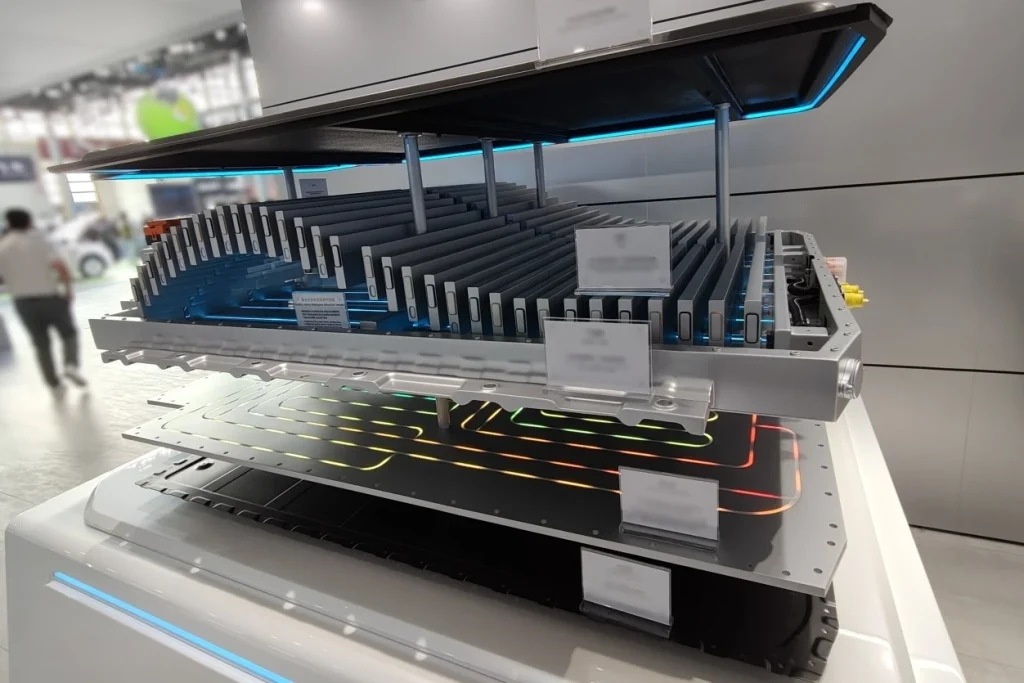
Featuring a thin-film cell design, the module stage is eliminated through CTP technology, reducing the proportion of structural components to less than 15% and increasing pack utilization to over 75%. The sandwich-style pack layout enhances rigidity for improved safety.
The product has passed 41 Chery standard tests, covering 24 items of the new national standards, with 10 additional tests exceeding national standards to accommodate global applications, and 17 tests exceeding the new national standards.
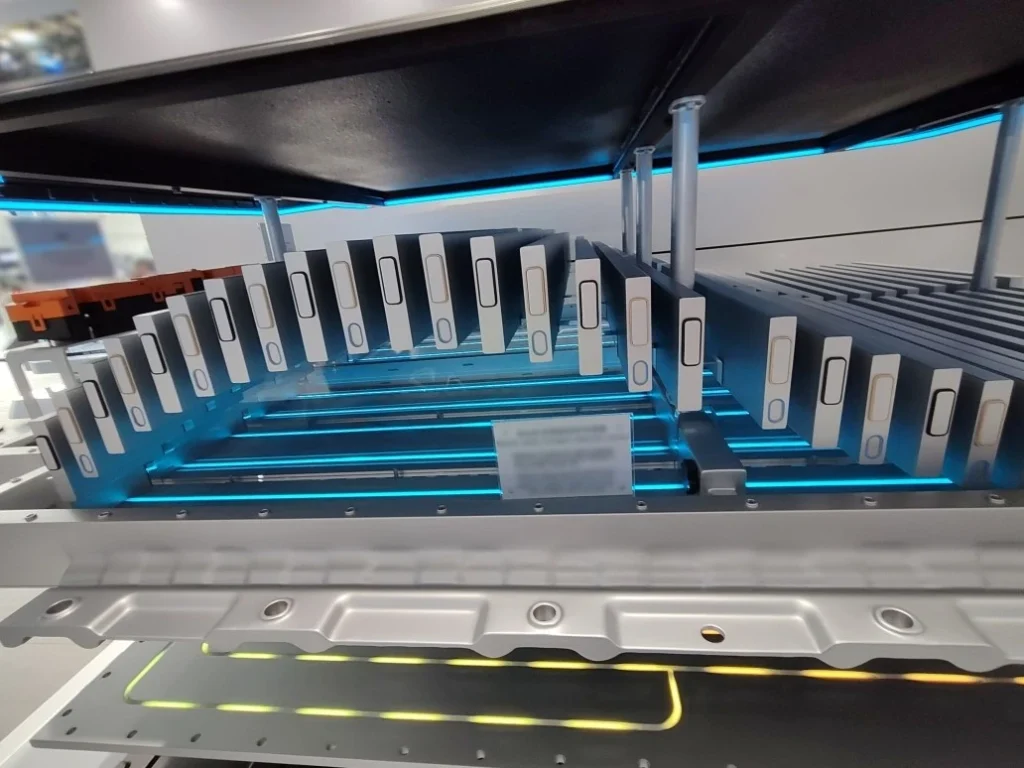
Battery safety intelligent detection sensor
Intelligently detect power battery damage areas, intelligently identify collision scenarios, achieve assessment of different damage levels and risk prediction, intelligently regulate power battery safety strategies to ensure user safety.
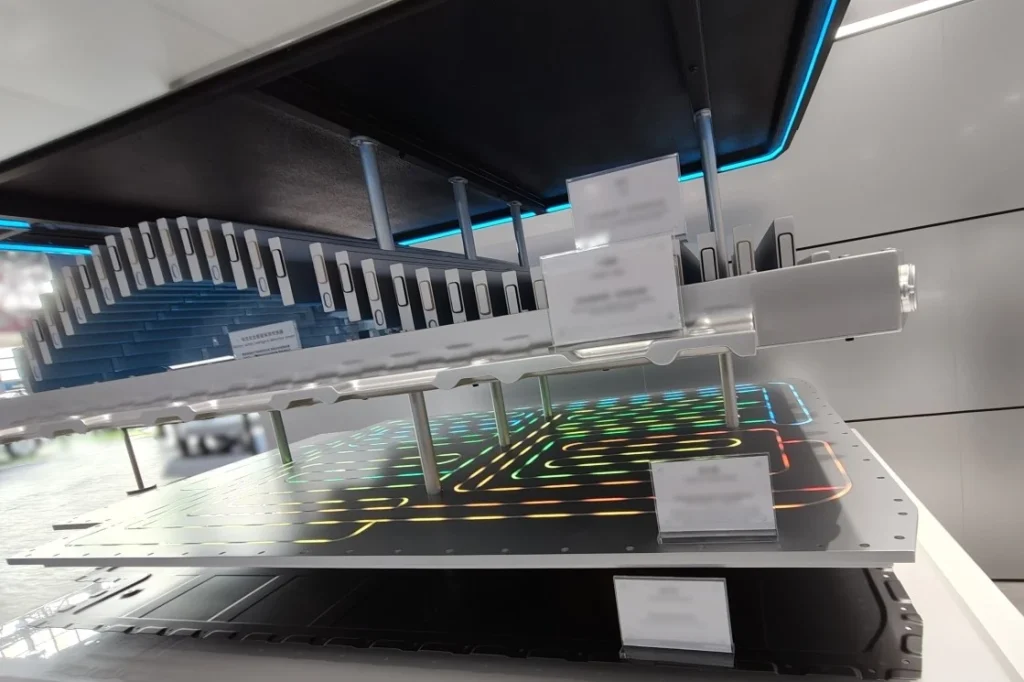
High Safety
- 41 Chery standard tests, comprehensive insulation protection, 200 kN compression test on the entire pack with no leakage or short circuits.
- Zero risk of fire or spontaneous combustion, no fire even when the cell is compressed and deformed by 60%, no fire at 180°C, and no fire after a 10-point needle penetration test.
- The Pack is made of high-strength steel with a tensile strength of 850 MPa, it withstands 200 kN of compression—twice the national standard.
- The battery bottom guard plate uses steel with a tensile strength of 1050 MPa, providing superior structural strength and scratch resistance.
- IP68 Water Resistance: The battery pack passes a combined vibration test plus IP68 (48-hour submersion) serial testing for water resistance, exceeding the national standard by 96 times.
- PSS Ignition Switch: Cuts off high voltage in 2 ms, exceeding industry standards by 50 times.
High Utilization
- The module-free CTP design
- High pack utilization, with a pack energy density of ≥150 Wh/kg
- Cell energy density of ≥200 Wh/kg
Wide Temperature Range
- The battery operates within a wide temperature range for charging and discharging, from -40°C to 60°C.
- It can be fully charged and discharged at -30°C, maintaining 92% of its energy capacity and 98% of its capacity.