Mercedes-Benz Tomorrow XX Technology Program
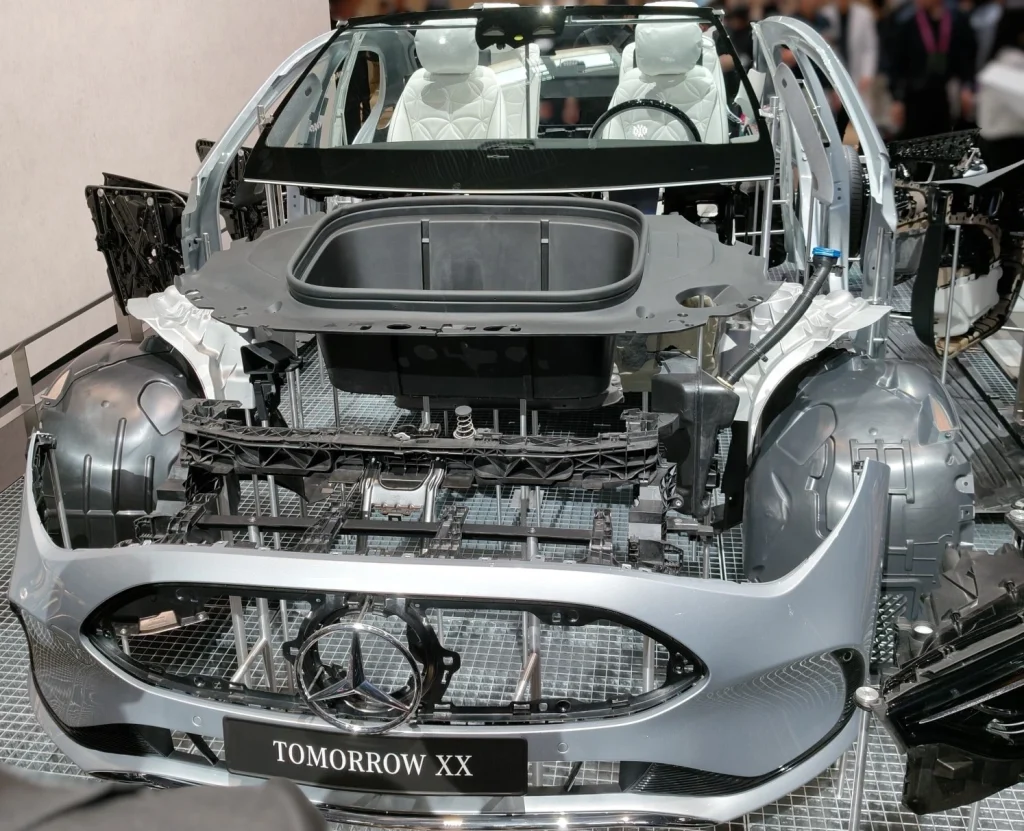
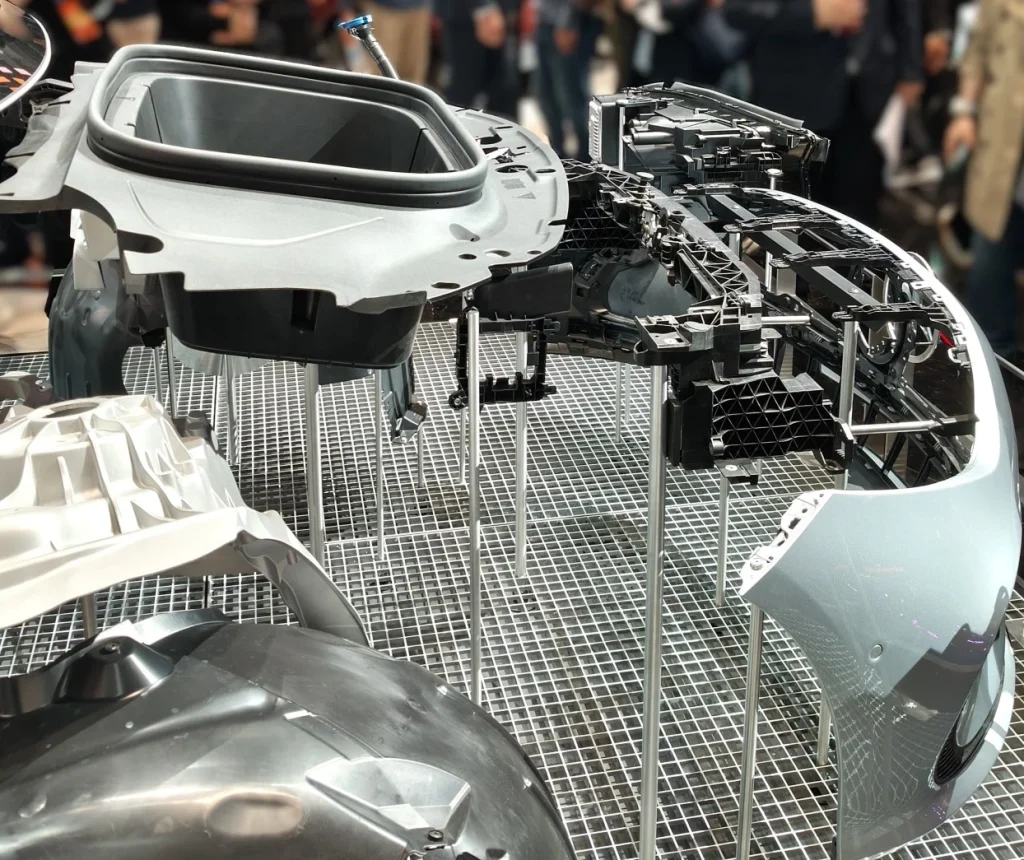
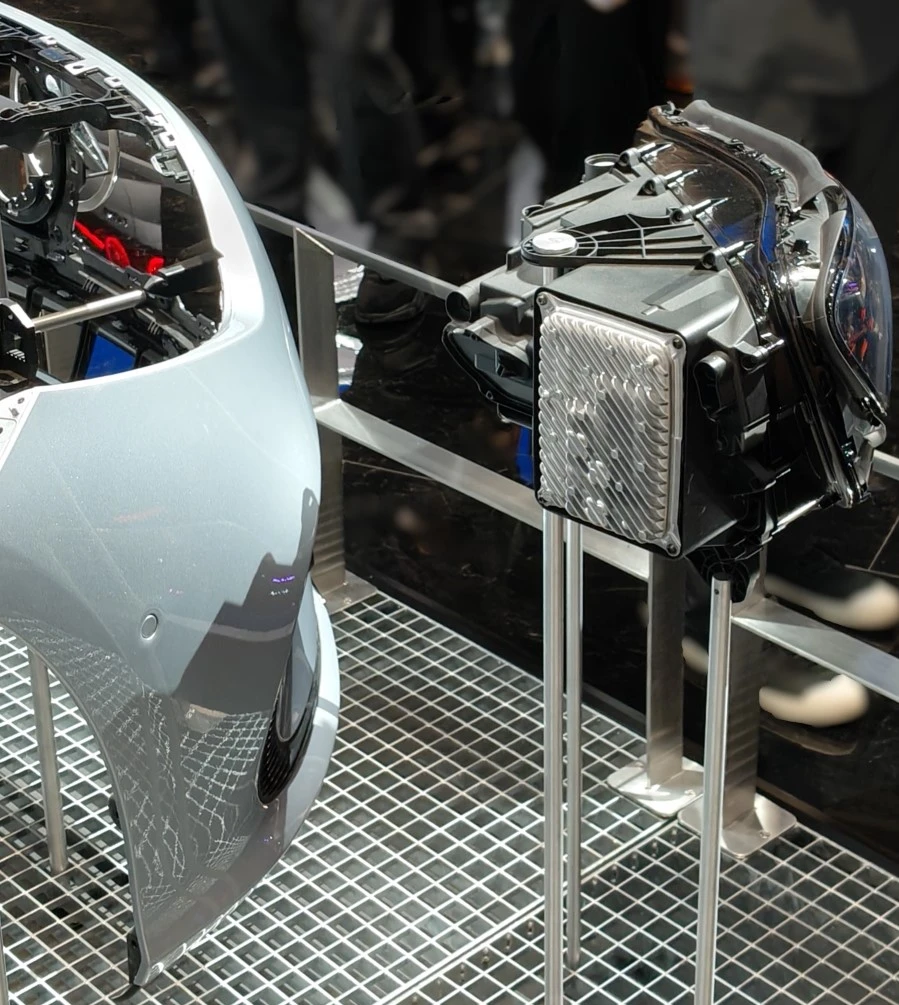
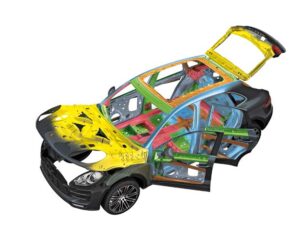
Tomorrow: modular structure with sustainable materials
- Recycled content & less material variation
- Screws instead of adhesive
- 5-layer concept for fast and easy repair
Up to 70% lower carbon footprint vs. conventional aluminium (Compared to EU average)
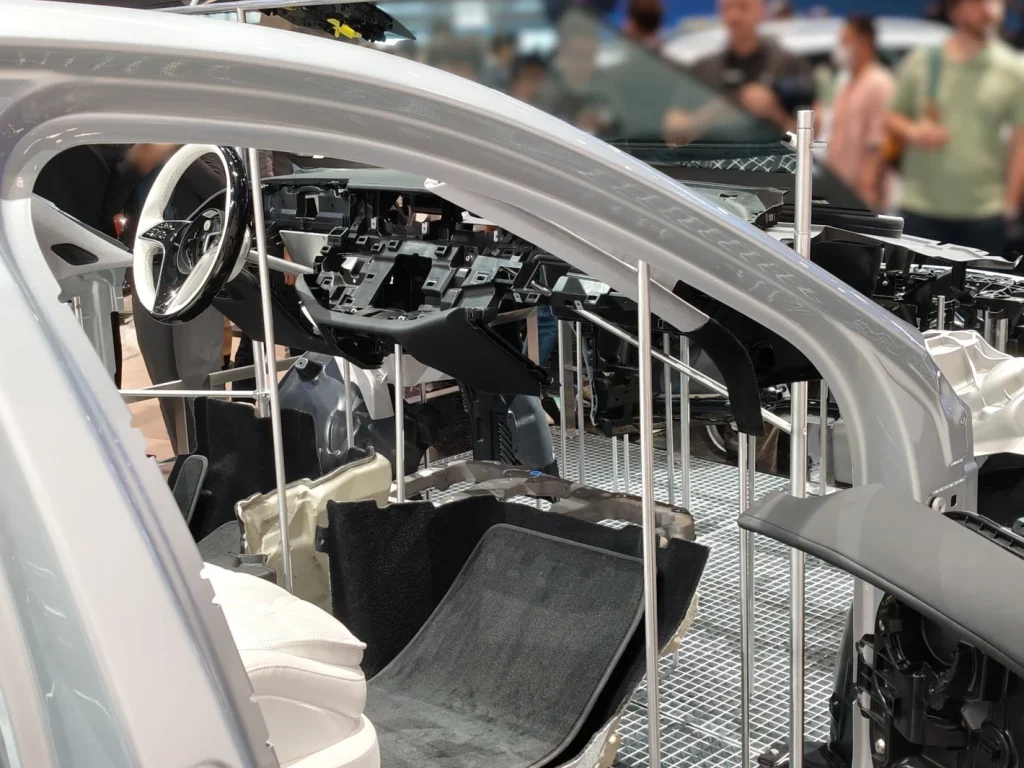
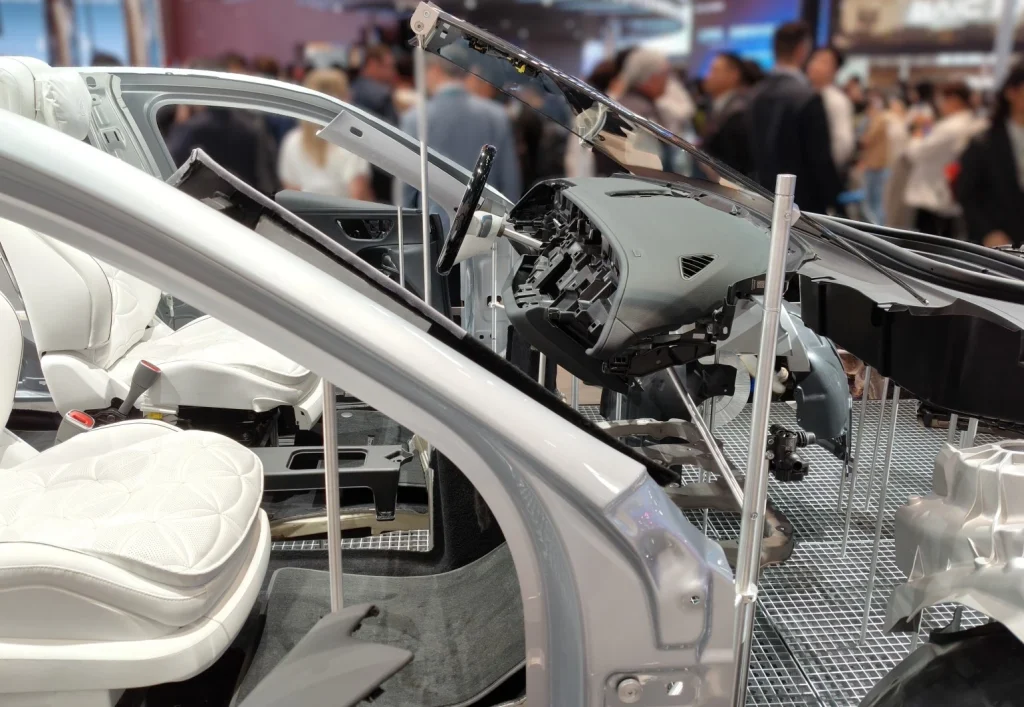
The Tomorrow XX team has found a new material combination for the upper and lower sections of the dashboard. Instead of different types of plastics, the component can be made entirely using plastics from the polyolefin family. The focus on one plastic family enables mechanical recycling of the entire structure – without separating the individual layers.
Approx. 33% lower carbon footprint vs. virgin plastics
Around 40% lower carbon footprint vs. genuine leather (Per sq.m. of genuine leather in a mid-size SUV based on biomass balance approach)
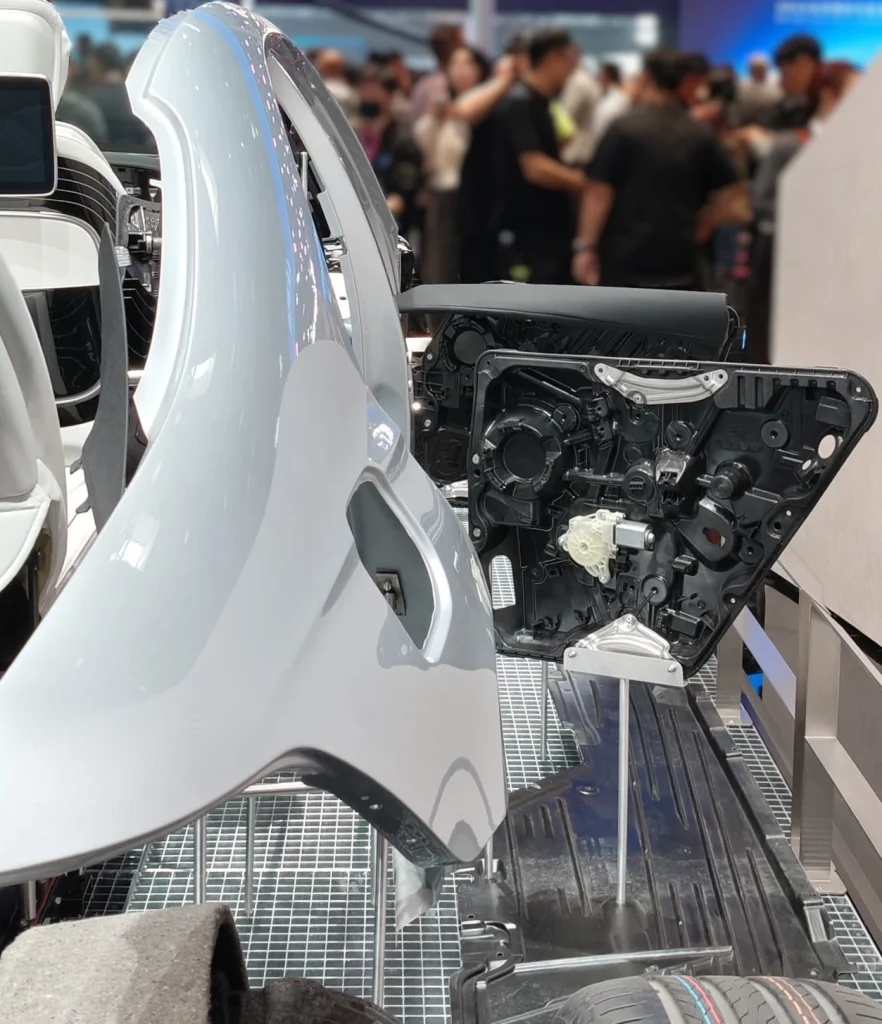
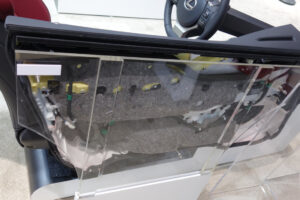
The development of an innovative door module is a good example of how fossil-based raw materials can be avoided in future. The body and the cable-drive housing are made from bio-based polypropylene (PP) reinforced with recycled glass fibre. Bio-based PP is produced from renewable raw materials such as vegetable oils and used fats. In addition, the chemical industry is increasingly working on new production methods. These include replacing fossil-based raw materials with green methanol or green hydrogen. Bio-based PP offers similar properties to petrochemical-based PP but has a lower carbon footprint. The module’s guide rails are made from an aluminium alloy with a high scrap content, while its sliders are made from mechanically recycled polyamide (PA). The pulleys are made from the high-molecular-weight thermoplastic polyoxymethylene, which is produced from stored CO₂ using the mass balance process (CO₂-to-plastic). The carbon footprint of the innovative door module is around 30 percent lower compared to today’s component.
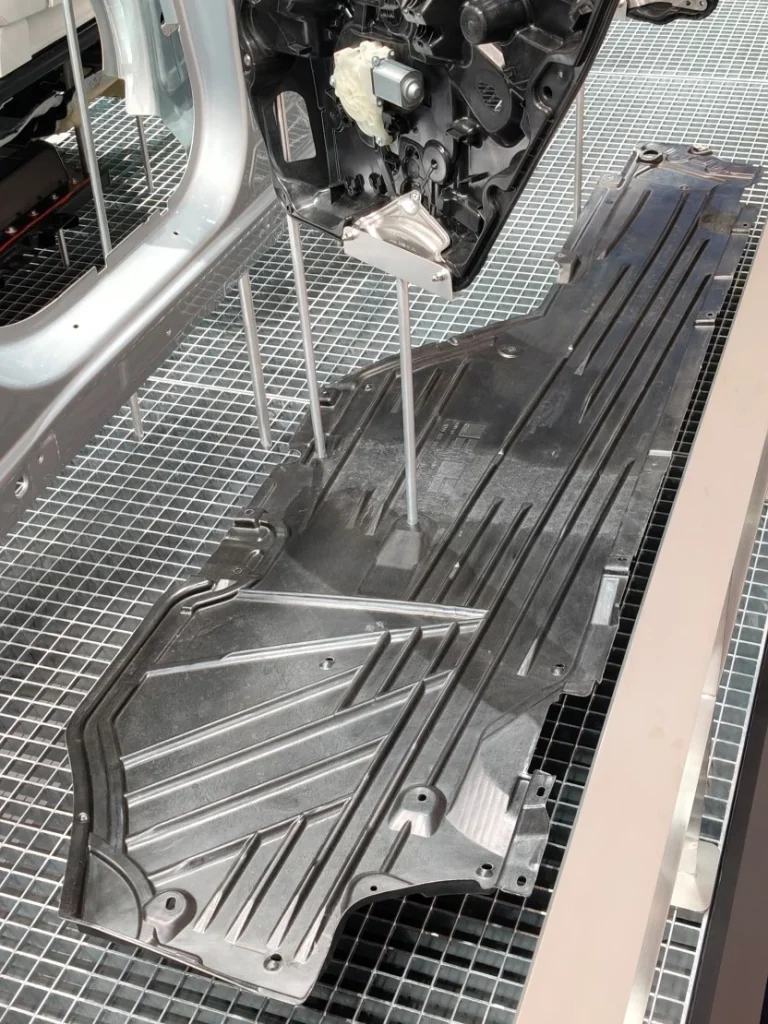
Up to 40% lower carbon footprint vs. virgin plastics (Underbody cladding of a mid-size saloon)
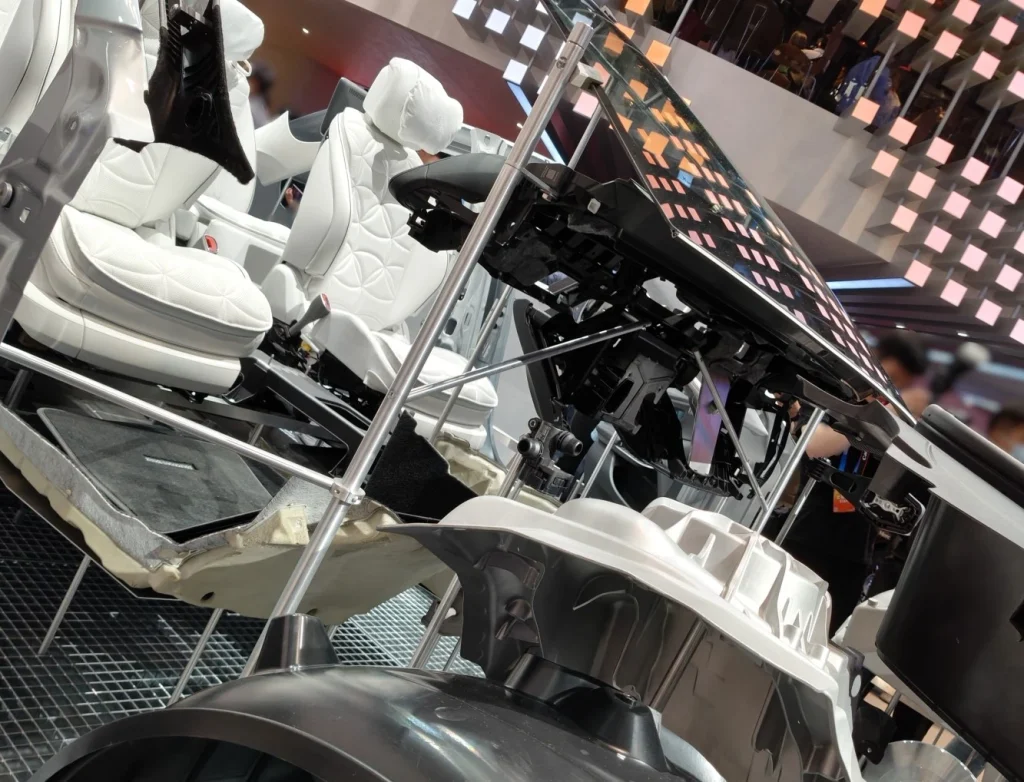
Rugs and mats made from PET mono-materials with high recycled content
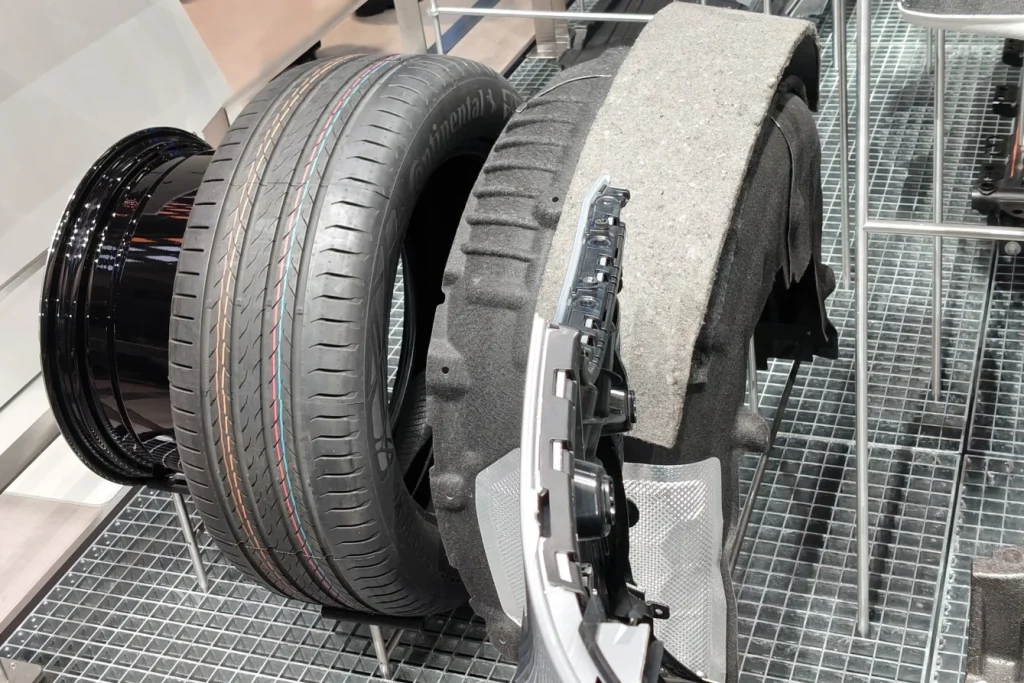
Because PET is highly suitable for recycling, it offers great potential to replace primary materials in vehicles. For many years, Mercedes Benz has used seat covers and wheel-arch liners made from 100-percent recycled PET bottles.
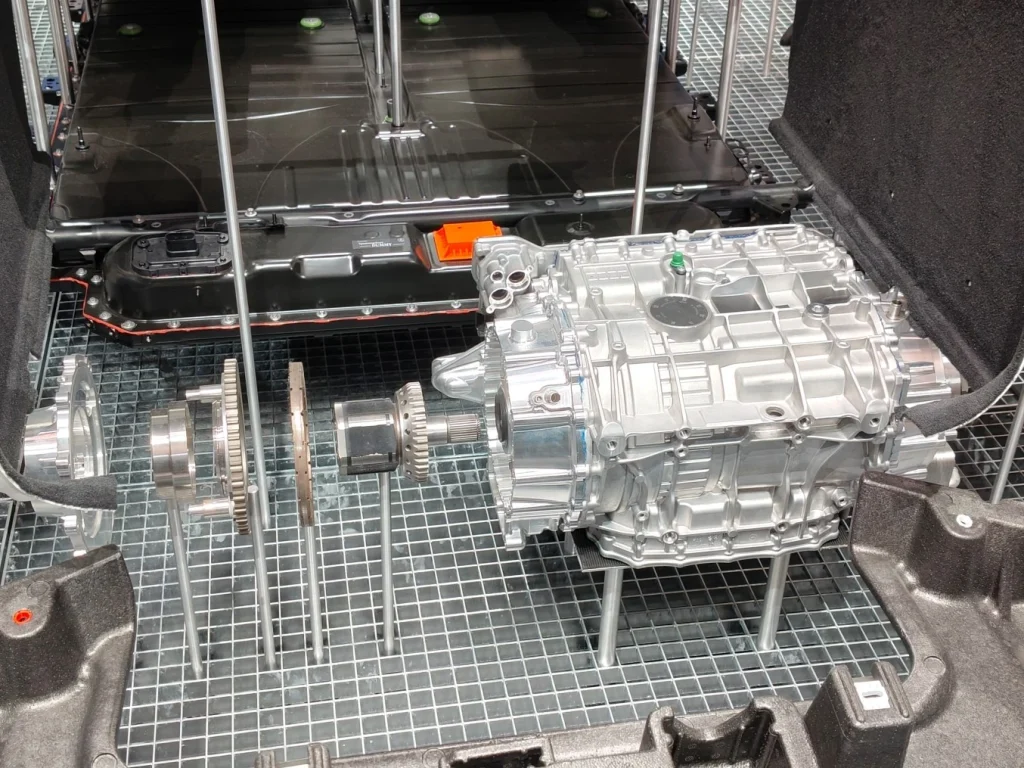
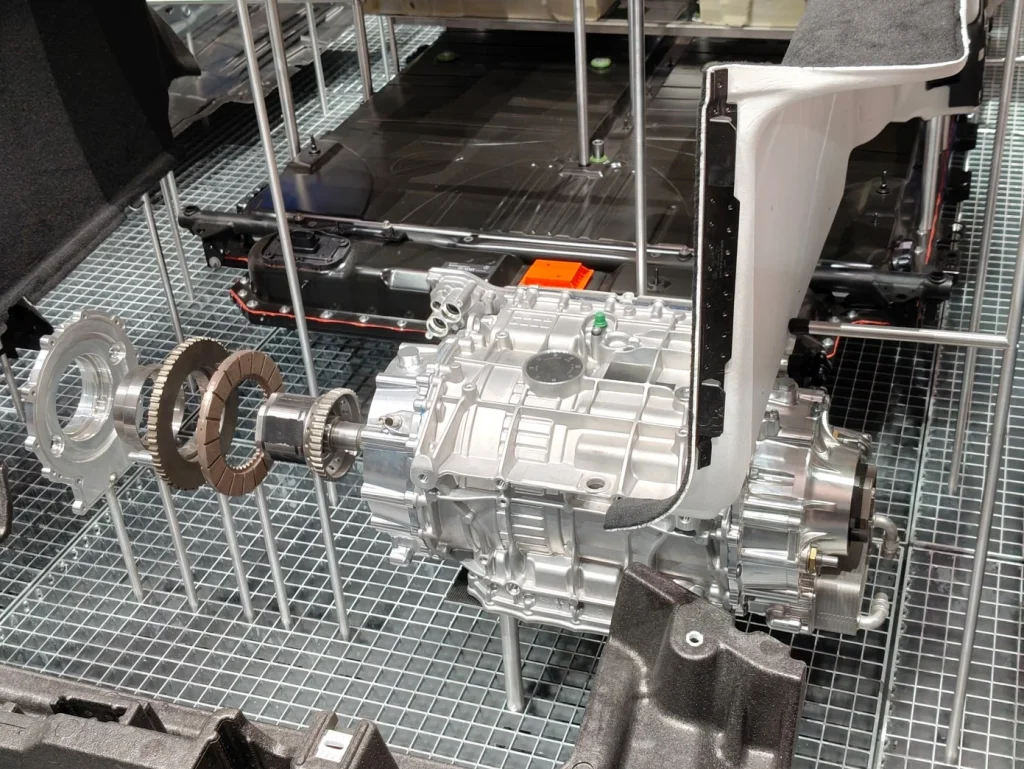
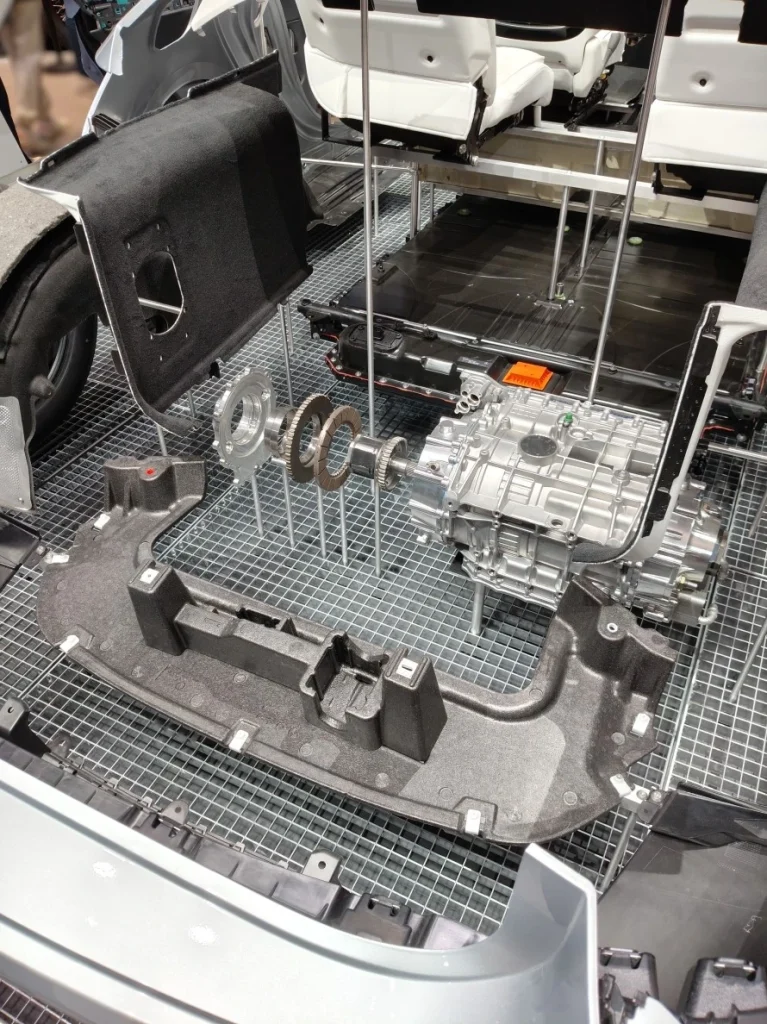
The principle
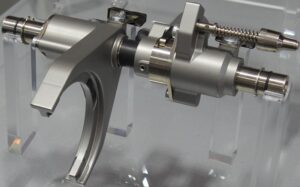
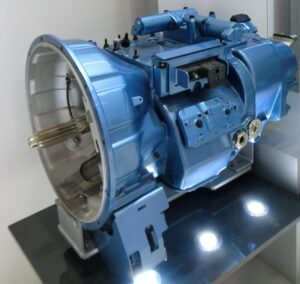
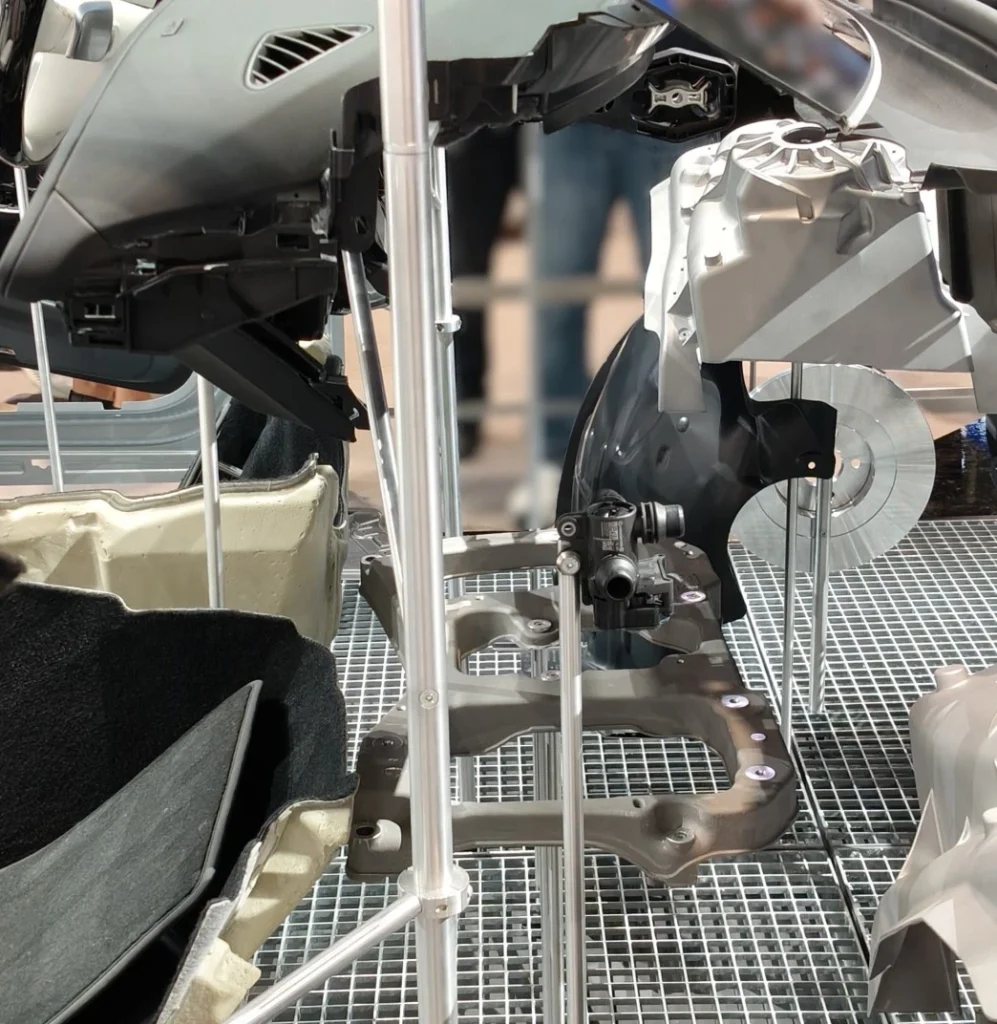
- Brakes are integrated into the motor-transmission unit on the left and right and replace conventional brakes.
Advantages for brake
- Durable, low-wear and virtually maintenance-free
- No emissions from brake dust
- No brake noise
Advantages for wheels
- Less unsprung masses
- Closed wheel design is possible for better aerodynamics and more efficiency
- Wheels stay clean because there is no brake dust
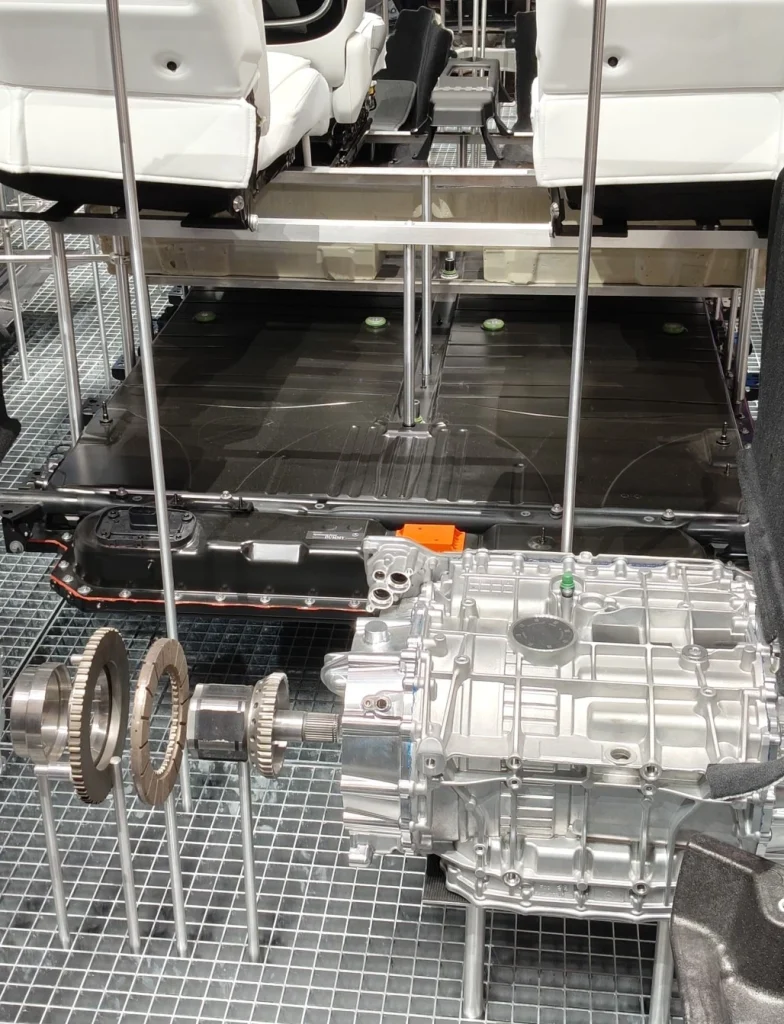
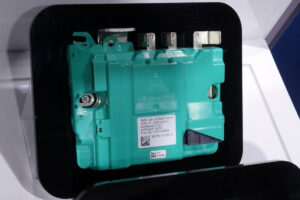
Battery cells with maximum recycled content brake pads in the anode and cathode materials